

What is Biodiversity?
Simply put, biodiversity is the variety of life on the planet. This includes the diversity of plants and animals, how they relate to each other and the environment, and the broader habitat in which we all live.
“Think of all the different species and places on our planet as threads in a net, the more threads that intertwine, the stronger the net. The stronger the net, the better nature can provide for us and cope with threats such as Climate Change.” – DLR Biodiversity
As part of Dún Laoghaire Tidy Town’s central objective, we aim to increase biodiversity, as well as nurture and preserve what Dún Laoghaire already has. With it’s beautiful seafront and the parks scattered throughout town, Dún Laoghaire is a place to care and advocate for.
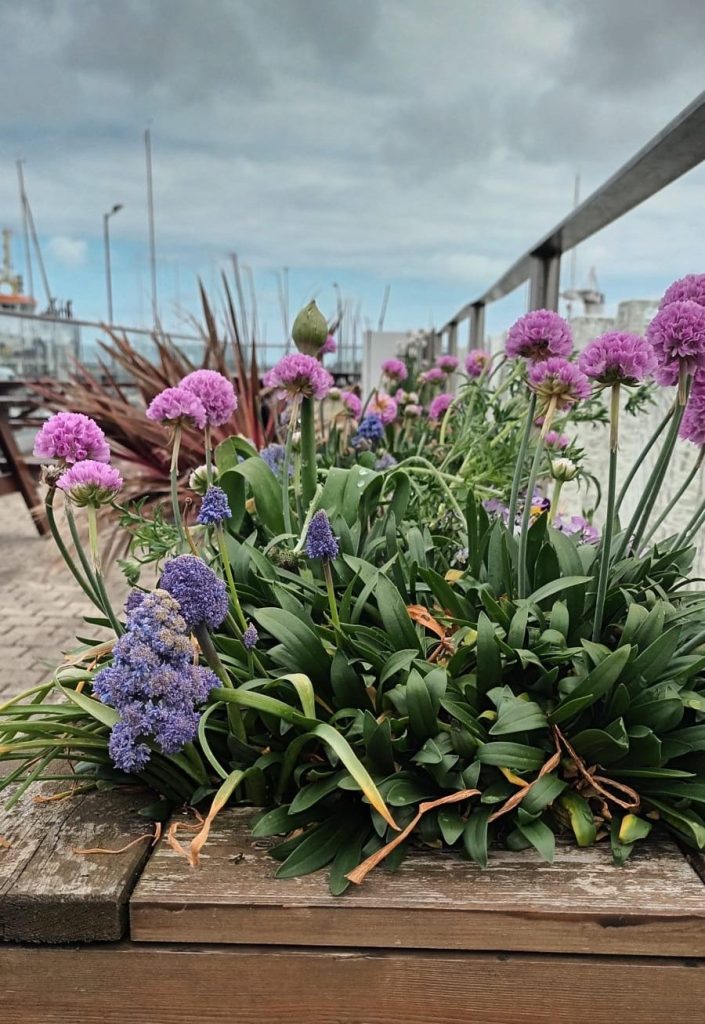
DLTT increases local biodiversity in various ways, including introducing more planters to an otherwise urban environment, and planting pollinator-friendly species to encourage the survival of our insect friends and young trees that will add shade and fruit for passersby, hopefully for years to come.
With 65 cruise ships and over 100,000 visiting the port in 2025 (citation), Dún Laoghaire town provides a unique challenge, as it is situated at the coast with a popular harbour. In order to combat this regular foot- and boat-fall, we organise and participate in coast clean-ups to provide a better living environment for the flora and fauna impacted by rubbish and to encourage community involvement.
We also put on workshops throughout the year, covering topics like growing your own plants in a small space, composting at home, creating a bee-friendly garden, and much more. Keep an eye on our platforms for the most up-to-date information.
Check out how gardening for biodiversity can help your garden and don’t forget to take the Biodiversity Tour of Dún Laoghaire.
You can also find more information about biodiversity in Wicklow here or in Dublin here.


Native Species
Ireland has 28 native tree species, including ash, birch, cherry, crab apple, hazel, holly, juniper, oak, pine, willow, and yew. Elder shrub, stinging nettle, creeping buttercup, daisy, and ivy are among the most common plants in Dún Laoghaire.
Some native animals include the red squirrel, the common lizard (the only native reptile to Ireland), Irish hare, pine martin (Ireland rarest native mammal), hen harrier, European badger, and puffin.
Some native Irish insects and arachnids include the Marsh fritillary butterfly (Ireland’s only legally protected insect), tawny mining bee, may bug, emperor moth, raft spider, green huntsman, and zebra jumping spider.
A few interesting projects include:
Invasive Species
Invasive species damage biodiversity by out-competing the local flora and fauna for resources. By combating invasive species, we’re encouraging biodiversity, and bettering our habitat.
Japanese knotweed, Himalayan balsam, and giant hogweed are examples of invasive species affecting the food supply and habitat of native bird and insects (citation).
The Asian Hornet preys on honeybees, decimating entire hives, while American mink and grey squirrels out-compete the native red squirrel for food. Mink also affect other animals like ducks, kingfisher, trout, and dippers. (citation)
DLR has made a County Invasive Species Action Plan detailing the impact of invasive species and the overall aim of the action plan. This was part of the broader DLR County Biodiversity Action Plan 2021 -2025 [pdf] and Dún Laoghaire Rathdown County Council Climate Action Plan 2024-2029.
Have you seen an invasive species? Report it here!
